Simple Housing
Vijfhuizen, NL
Location: Vijfuizen, NL
Design: 1998
Year: 2003 phase 1
Site Footprint: 10.200 m2
FSI Netto: 0.4
Gross Floor Area: 2.800 m2
Parking: -
Program: Phase 1: 22 dwellings,
circa 90-100 m2, 20 dwellings, circa 125 m2,
Phase 2: 10 dwellings, circa 160-200 m2,
4 tower dwellings, circa 250 m2
Client: Municipality of Haarlemmermeer, Dura Bouw Amsterdam BV
Sustainability: Nieman Adviesbureau
Structural Engineer: Constructie Advies Bureau Steens BV
Associates: Bureau Bouwkunde, Amsterdam
Urban Supervisor: Liesbeth van der Pol
Landscape: Bureau Alle Hosper
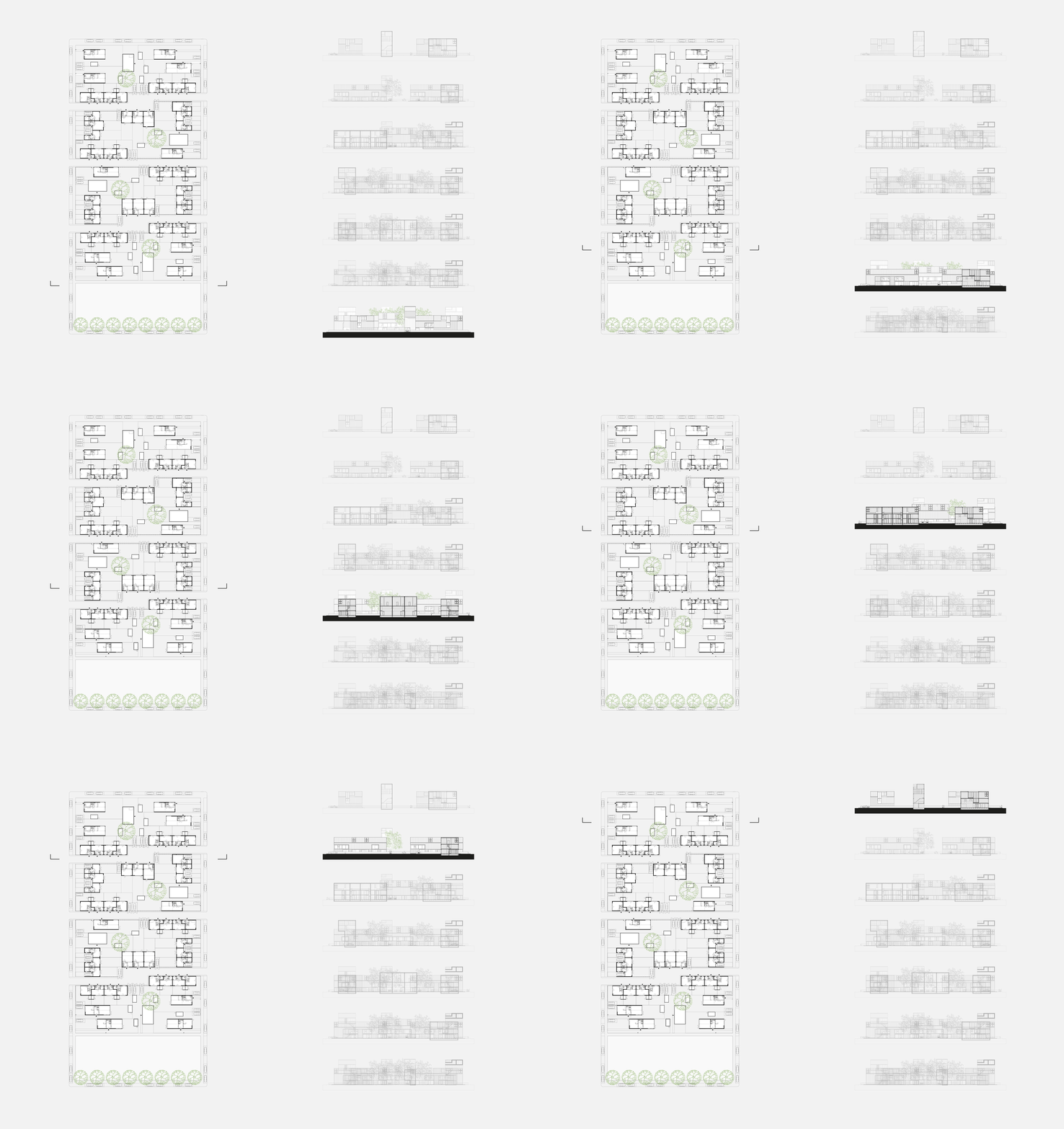
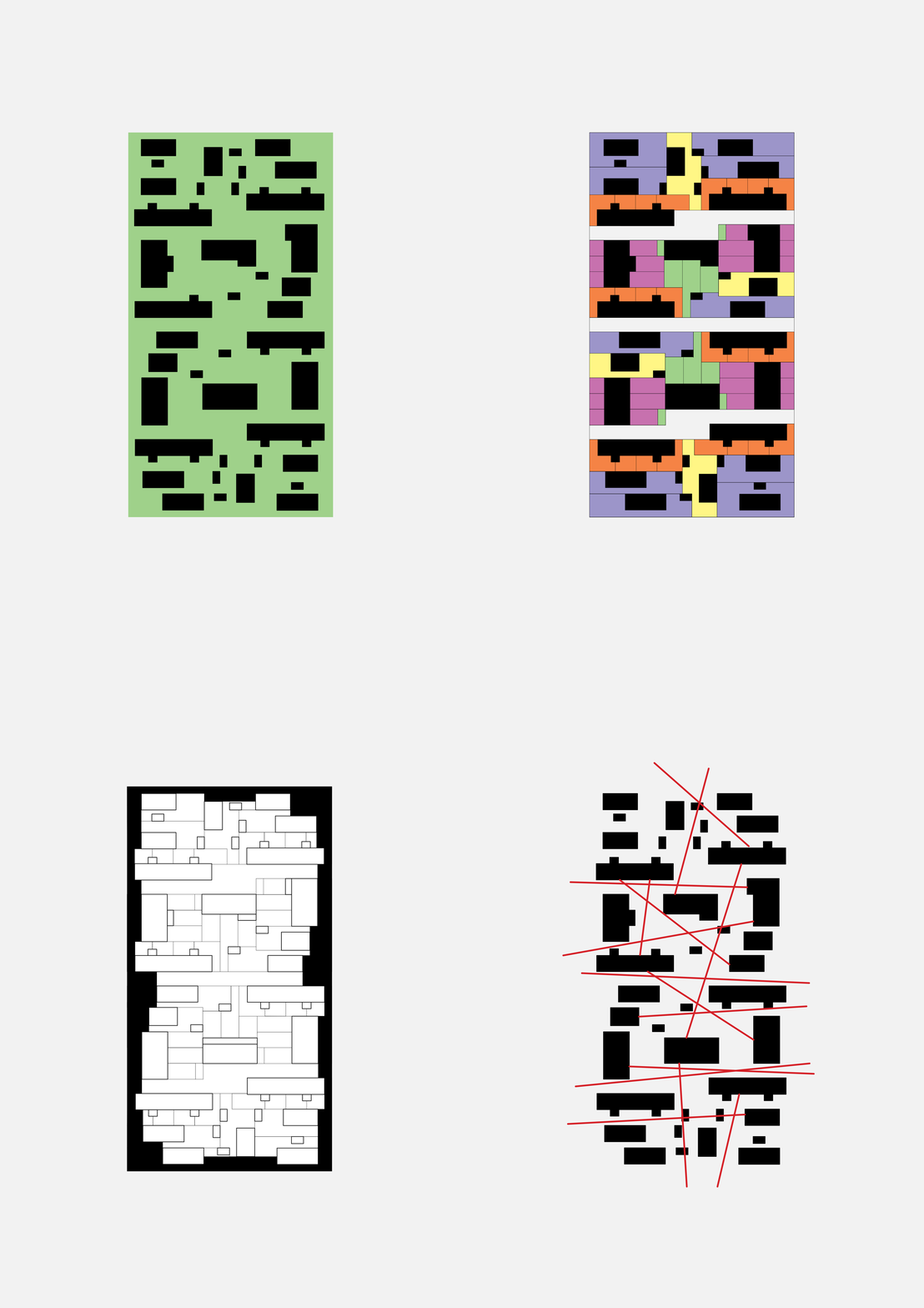
After winning the competition in January 1998, we were commissioned to design 56 houses on the edge of the village of Vijfhuizen. The project formed the first phase of a larger VINEX expansion of approximately 700 dwellings to be realised over the following five years. The design challenge lay in the combination of high density, small plots and a strong mix of cost categories. Conventional row housing proved too rigid to provide both privacy and quality of outdoor space, and it offered few answers to practical issues such as parking, entrances and the relationship between front and back. Our ambition was to show that suburban comfort and urban density do not have to conflict. Instead, the plan proposes an alternative way of living on Dutch VINEX sites: compact yet calm, contemporary yet rooted in village-like spatial principles. We began with a simple family of houses and positioned them through a strategy of “regular irregularity”.
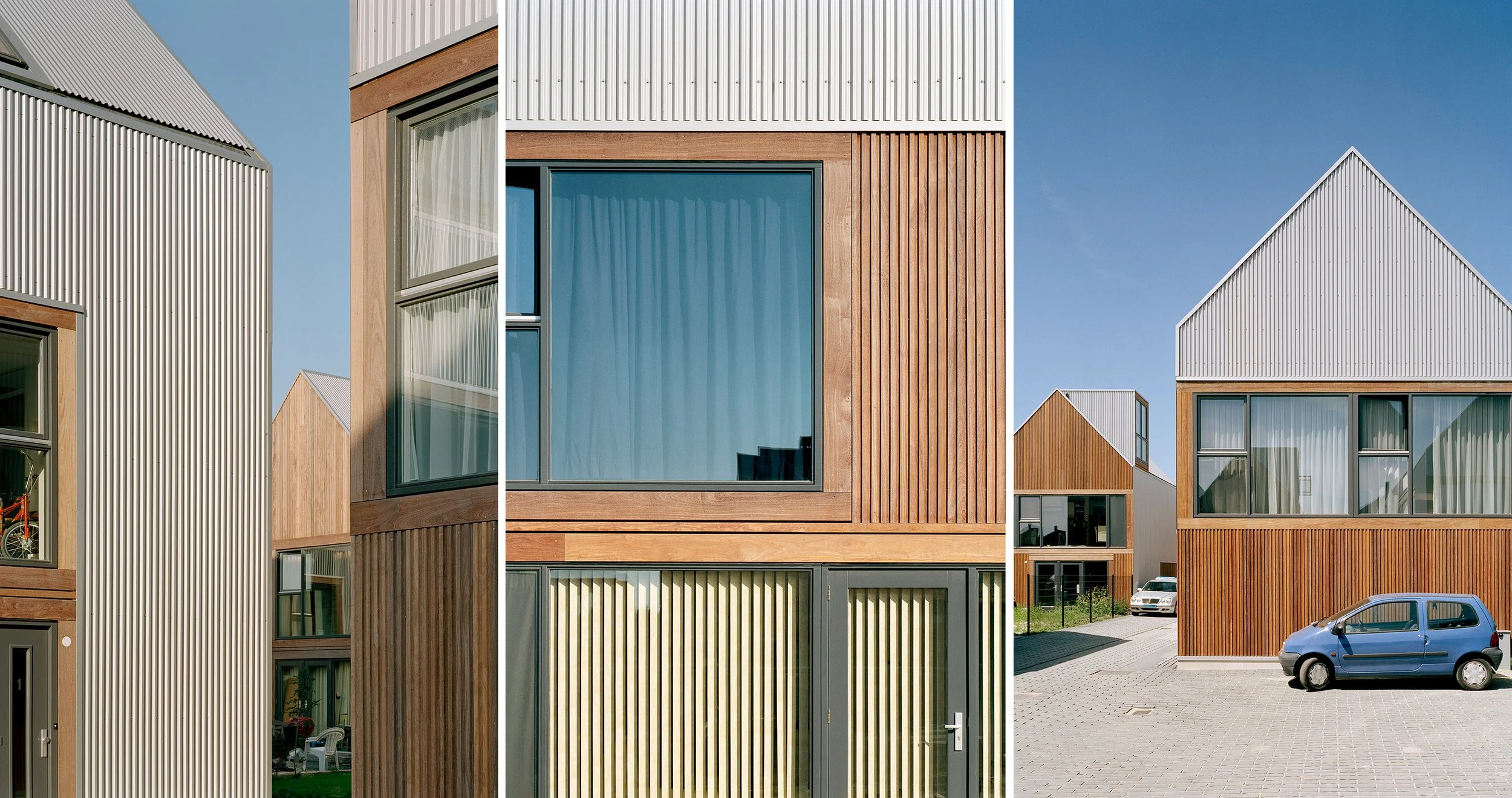
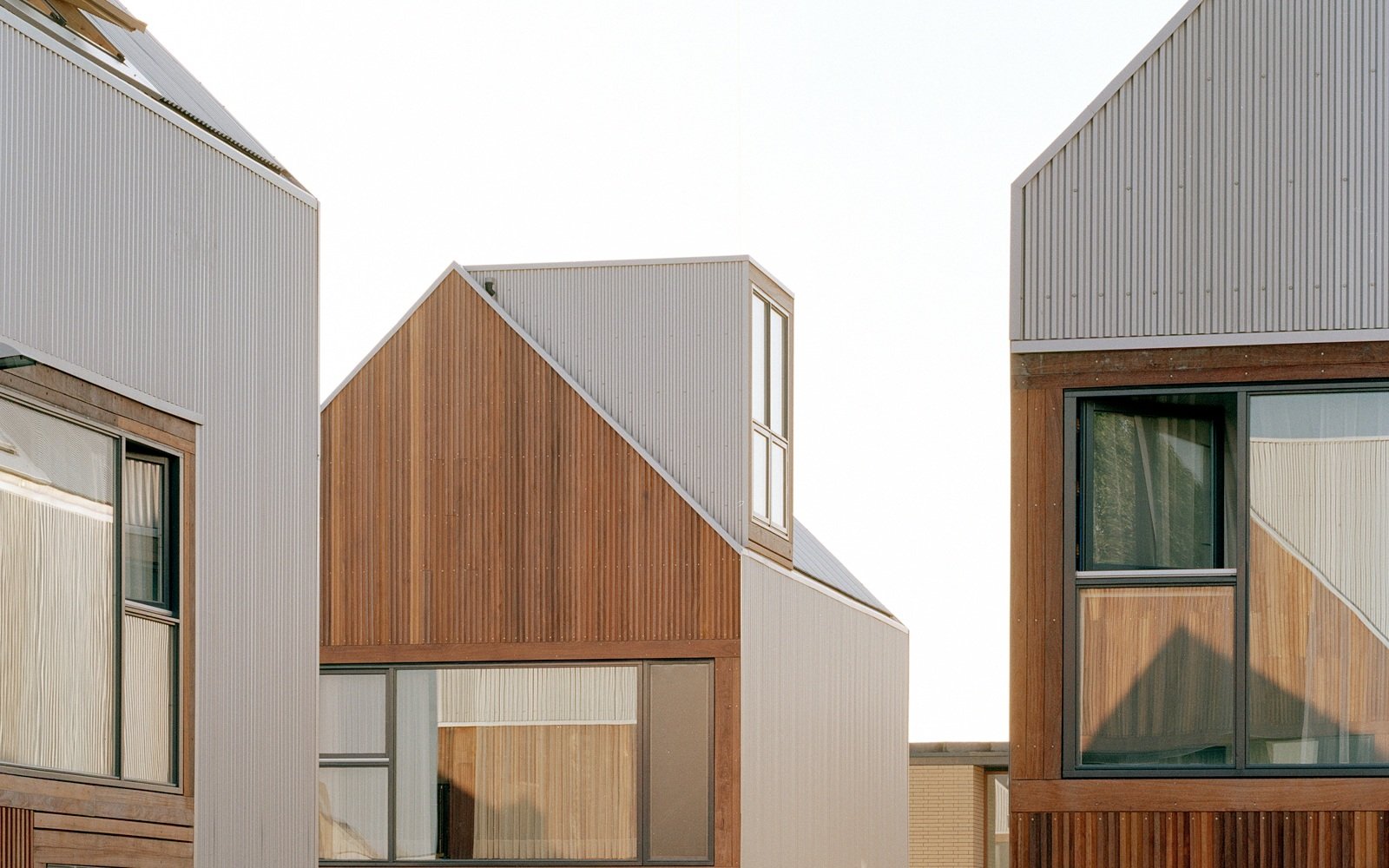
This arrangement creates a cosy, village-scaled density while maintaining surprising openness and long sightlines. The spaces between the houses vary in width and character, allowing privacy and collective proximity to coexist. Diagonal views from inside to outside are used deliberately to expand the sense of space and create a layered relationship with the neighbourhood. The homes themselves are conceived as elemental, farm-like typologies, with variation achieved primarily through size, supporting affordability while reinforcing a sense of shared identity. Calmness, consistency and durability guided the architectural language. The façades are wrapped in an equal interplay of vertically grooved hardwood (Cumaru) and ribbed steel cladding. Over time, weathering will soften contrasts and allow both materials to blend into a new oneness, giving the ensemble an increasingly unified and timeless presence.